Social Media Background for Hiring: Tips, Red Flags, and What to Avoid
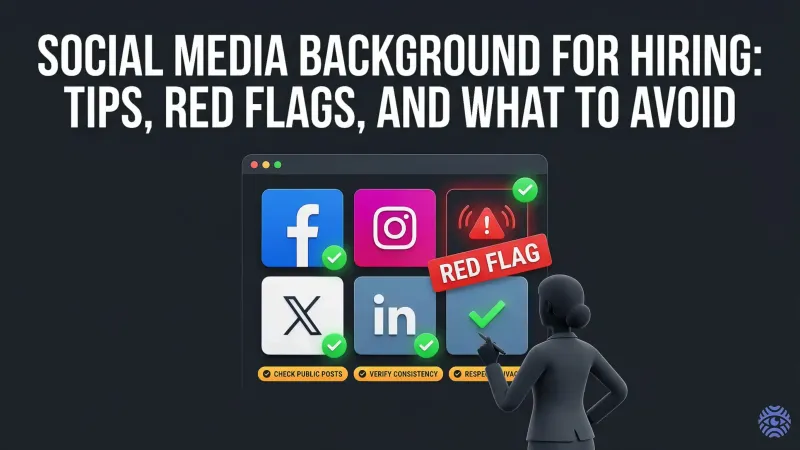
Social media have taken an extensive part of lives. A place where people can express thoughts, ideas and experiences. Employers look at social media of potential employees all the time during the hiring phase. Today, there is an untold amount of information in cyberspace and simply doing a background search on the internet can turn up a lot; this is used by industry for example to see who they are thinking about hiring. In this blog post we will discuss why the employers do that, what they are looking for and how you can get your online image ready for the upcoming social media background check prior to signing a contract with them.
Why Do Employers Look at a Candidate’s Social Media Sites Such as Facebook, Instagram, and Twitter?
Social media background is checked by employers to get a better understanding who you are outside of the resume. When hiring, a social media background can help them assess your personality, values and how you present yourself online. Applicants are pressured by workplaces to know BambooHR findings echo the fact that companies want to predict how a candidate will fit into their workplace culture before hiring them. They could possibly look at your posts, comments or even photos to see if you are a mature person worth hiring versus some skank hoe.
Ex: Maybe a lighthearted post on X about volunteering might illustrate that you are a team player. However, negative comments or offensive statements raise more questions. This type of information helps employers in making informed decisions, but they should see it in the light of ethical hiring to avoid using such accountability as part of unfair judgment.
Which Social Media Channels Can Employers Check
In general, employers are allowed to check public social media background such as:
- Facebook: Posts, photos and groups.
- Instagram: Pictures, stories, and captions.
- Twitter/X: Tweets, retweets, and interactions.
- LinkedIn — your professional profile and recommendations
- TikTok: Videos and comments.
- Other blog platforms and YouTubing or posting on Reddit
Resume. This would suggest that employers usually look for public profiles, although they may meander to private accounts if linked from a public one. For example, they could see both your Instagram and public X account. Employers build a complete picture of who you are by Googling your digital footprint in various platforms.
How Do Employers Find Your Social Media?
Your social media background can be checked by employers simply through a Google search. They might:
Search your name in Google: It quickly brings up all of your profiles.
LinkedIn or X handle: If you list a LinkedIn or X username on your resume, that will be their next stop — so double-check those.
Screening tools: companies such as Ferretly have software to screen in multiple platforms at once.
They may also be searching for your name in different variations or by your email address. They may even search for “John Connor + city” to be extra sure they have the right person. You can limit what they see by keeping your privacy settings tight, but public posts are up for grabs.
What Are Employers Looking for When They Conduct a Social Media Screening?
These factors are considered by the employers when they find resumes through social media. Business News Daily says they search for:
Professional Image. Are Your Posts Professional? Posting articles in your industry on LinkedIn, you want to appear as a subject-matter expert.
Offensive language, discriminatory remarks and even criminal activities could be put a red flag on your actions and decrease the likelihood of getting hired.
Cultural fit. Writing an article about a hobby or belief may illustrate you are in alignment with the mission of the company.
Use creative Instagram posts or X threads about your work to show off talents you haven’t included on your resume.
However, employers must avoid bias. For example, it is unethical for you to base any decision on hiring or not hiring someone because of their race, religion, or personal beliefs.
Pros and Cons of Employers Checking Social Media
Should employers check social media? They use pre-employment Social Media screening. Here’s a breakdown:
Pros:
- Social media: Ideal source to get a better insight through personality/interests of candidate
- Identity: It validates the truth of everything on your resume, including job history or abilities.
- Culture fit: Employers can figure out whether you are aligned with their values.
- Red flags: Read them early to know how the unprofessional work environment is formed.
Cons:
- Bias: Employers may judge based on personal beliefs or lifestyle.
- Preserving privacy: Some candidates may feel that their digital trail is being violated.
- Not being accurate: Old posts, or accounts that have been hacked, are not an adequate proof of who you are now.
- Legal actions: Using social media for hiring can be a legal violation, which is explained later.
Ultimately, to achieve this balance is crucial for ethical hiring and fair social media and hiring.
How Can Social Media Affect Job Opportunities?
Your social media background check can make or break your job chances. A strong online reputation can boost your professional image. For example, sharing a project on LinkedIn or tweeting about a conference can impress employers. But mistakes can hurt:
- Negative posts: Complaining about past jobs or coworkers looks unprofessional.
- Inappropriate content: Photos of partying or offensive jokes can be red flags.
- Inconsistency: If your LinkedIn says you’re a manager but your X posts suggest otherwise, employers might question your honesty.
A Ferretly blog post explains that 70% of employers use social media background check to screen candidates, so your digital footprint matters.
What Should Job Candidates Avoid Posting on Their Social Media Accounts?
To protect your professional image, avoid these posts during a social media background check:
Offensive Content
Do not curse, use hate speech or discriminate in any way. Such as, the cruel mockery of others due to race, gender, creed or religion, age orientation or political colors. Something as benign as a joke can be taken wrong or read as not so humorous. Posting memes that attack others on the basis of stereotypes or using swear words when discussing current events in a heated debate can be something negative in social media background check.
Illegal Activities
Do not post pictures or comments about drugs, underage drinking, or criminal behavior. Even for something as harmless as a post titled “crazy night out” next to images of drinking oneself into oblivion or playful drug use jokes. Although these activities may have taken place many years or in places where they are potentially legal, it can still register concern for employers with a commitment to work site safety and upholding of the law.
Work Complaints
Avoid badmouthing past employers, coworkers, or clients at all costs. This includes subtle complaints like “another Monday at this terrible place” or venting about difficult customers. Employers want to hire people who maintain professionalism and confidentiality. Even if your complaints are justified, publicly airing workplace grievances suggests you might do the same to future employers.
Oversharing Personal Information
Resist sharing too much personal information, like detailed family drama, relationship problems, financial struggles, or specific health issues. While it’s natural to seek support online, posts like “going through a messy divorce” or “can’t afford rent this month” can make employers question your stability or focus. Keep personal challenges private and share them only with close friends through direct messages.
Unprofessional Photos
Remove party pictures, revealing clothing, or anything that looks inappropriate for a workplace setting. This includes photos where you’re visibly intoxicated, making crude gestures, or in compromising situations. Even beach vacation photos should be tasteful – think family-friendly content rather than spring break revelry.
Controversial Political Opinions
While you have the right to express political views, extreme or inflammatory political posts can alienate potential employers. Avoid sharing conspiracy theories, engaging in hostile political debates, or posting content that could be seen as divisive or extremist.
Financial Complaints or Bragging
Don’t post about money troubles, unpaid bills, or expensive purchases that might seem excessive. Comments like “broke until payday” or flaunting luxury items can create concerns about financial responsibility or judgment.
Instead, focus on positive content like achievements, hobbies, or industry insights to strengthen your online reputation. Share professional accomplishments, volunteer work, relevant articles with thoughtful commentary, or posts that showcase your expertise and values in a constructive way.
Instead, focus on positive content like achievements, hobbies, or industry insights to strengthen your online reputation.
Tips for Passing Social Media Screenings
Here are practical tips to ace a social media background for hiring:
Search Google for yourself, see what employers get as well. Use your name in quotes and scroll through a few pages of it.
Make personal accounts private on sites like Facebook and Instagram. Manage who can view your: Posts Photos Friend Lists
Clean up old or sketchy posts. Delete anything you question about being appropriate. That means, no photos of you at parties, no statements that may be controversial and, definitely, not complaints about your old bosses or anything unprofessional.
Post thoughtfully. Base your posts on what you’re good at or care about, i.e. a LinkedIn article of Industry Trends or an X post regarding a Team Win.
Make you your profiles and CV match in terms of what jobs you had and when. If your LinkedIn lists “Marketing Manager 2022-2024,” but your resume shows “Senior Marketing Specialist” you must reconcile this.
Get high quality photos. LinkedIn is for clarity, not that party pic you took on your birthday last year. Select photos where you are suitably attired and seriously smiling.
Improve your LinkedIn profile: a catchy, headline — go beyond the usual title to include something like: Marketing Manager | Digital Marketing Professional | Content Strategy & SEO Expert.
De-tag any inappropriate tagged pictures. Go through photos people have tagged you in and untag yourself in any that show you in an unprofessional light. If needed, ask your friends to take down posts that paint you in an unflattering light.
Keep a count of mentions. Get Google Alerts for your name. This is also a great way to keep track of your online footprint.
Craft good content. Share articles relevant to the industry and offer congratulations when a colleague gets an award, or they just get certified in whatever skill.
Review former user IDs. If your previous User ID was an idea that didn’t make it past the time like “PartyGirl2020” or “BeerLover99” you can found brand-new expert profiles, based on your name in its place.
The way you comment on other social media posts. You do not want to start arguments or snarky comments that make you look bad.
Resume.co suggests checking your profiles every few months to keep your digital footprint clean.
Can Employers Legally Use Social Media in Hiring Decisions?
Yes, employers can legally check public social media profiles, but there are rules. According to BambooHR, they can’t:
- Discriminate: Using protected traits like race, religion, or age to reject candidates is illegal in many countries.
- Access private accounts: Asking for your social media passwords or forcing you to log in violates privacy laws in some places.
- Ignore regulations: Laws like the U.S. Fair Credit Reporting Act may apply if third-party screening tools are used.
Ethical hiring means employers must focus on job-relevant information. If you’re concerned, check local laws or consult a legal expert.
How to Clean Up Your Social Media Before Job Hunting
Before applying for jobs, clean up your digital footprint with these steps:
Review all social media accounts thoroughly:
Any social media you can think of… Facebook, Instagram, X (formerly Twitter), LinkedIn, TikTok, Reddit etc., blogs or forums. Do this to see what your profile will look like and scrutinize old posts, photos, comments etc. that might make you seem bad or even worse just be plain immature. Also, try your old usernames or secondary accounts you forgot.
Delete risky or inappropriate content:
Take away any posts, memes, comments, or pictures that may be considered offensive. Some points will not project a professional (normally very political term) or personal view. Put yourself in the place of a recruiter. If you deleted anything that might raise a red flag or make you seem like a terrible potential coworker, it is likely for the best.
Adjust your privacy settings wisely:
This includes setting all of your social media accounts to private if you do not want new followers, as well as limiting features on platforms that allow others to tag you or view your activity. In the meantime you should still be professional, you can have your profiles on platforms like LinkedIn and X as public but only encase your career-related things.
Update your professional profiles with:
Ensure your LinkedIn and/or X bio include recent roles, accomplishments, skills and certifications. Use a professional profile photo, update your headline and summary, also incorporate certain keywords as the recruiters might use to search. They say first impressions matter and your online appearance speaks volumes.
Monitor tags and mentions regularly:
Google your name and look up common social sites that people may have tagged you in or mentioned you from. If you do spot less than mid flattering, or even unprofessional photos/posts from friends, ask them nicely to be untaged or deleted. This is to make sure you are on top of your online reputation.
Stay Updated with the Digital Reputation Tools:
Use tools like BrandYourself, Google Alerts or ReputationDefender to scan the Internet media background for content that can harm your reputation. These 80+ tools can keep you out in front of recruiters and help you clean up anything that might turn them off.
Taking these steps shows employers you’re serious about your professional image.
Conclusion
Nowadays, when you apply for a job, getting a social media background check for employment is very common. It lets employers know about your personality, skills & fits. Social media hiring is great, but it also comes with a level of privacy and inequality that should worry people. It is easy to manage your digital footprint, secure posts in texts, and follow us on some Tips for passing a social media background search. Clean up your profiles, do some amateur image control, and be as professional as you can to get a job.
To learn more about this, read our content on social media background check or employers and the use of social media for hiring or even another how to hire using social media site.