What Does a Background Check Consist Of?
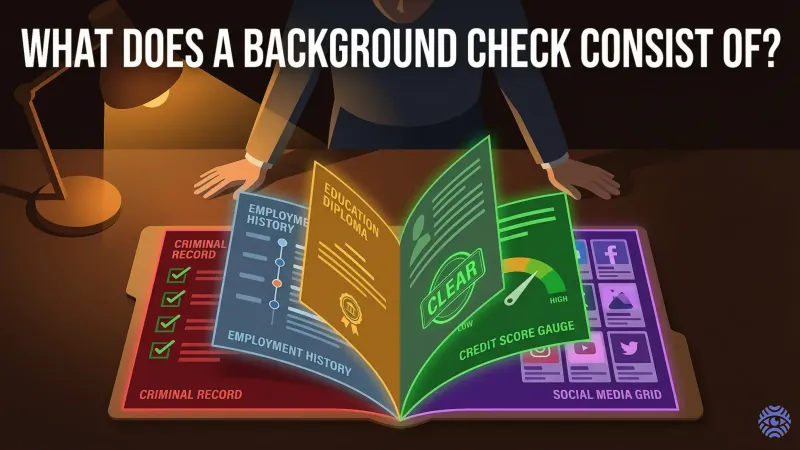
One of the most common procedures when hunting for work is to have a background check done on potential employees. Employers carry out this preliminary check to ensure details are true, to reduce risk, and ensure they're getting the right person. But many job hunters may be asking themselves: What's involved in a background check? The answer is determined by the company, the role they're hiring for, and the sector they operate in. However, almost all background checks comprise a number of standard elements that will give a complete picture of any candidate.
In this guide, we'll explain what does a background check show, what background checks include, and why they matter for a job background check.
What Does a Background Check Show?
When you apply for a job, employers tend to verify your identity, past work you have done, and what accreditations you might have got hold of. They probe for anything that might alert them: criminal records, phony papers, and everything in between.
For that reason, a background check for job purposes serves to tell about both where you stand personally and how reliable your work habits are. For example, while duties differ, so may levels of screening.
What Does a Background Check Consist Of?
Let's break down the main parts of a background check and how they affect the hiring process.
Identity Verification/SSN Trace
In any background check, the first thing they need to do is verify your identity. In the U.S., employers check your name, birth dates and Social Security Number (SSN). This helps to make sure that you are really the person you claim to be and it also looks for records tied to your SSN. It also searches global databases for fraud and identity theft.
Social Media and Online Presence
Today, many companies add a social media background check to see how candidates behave online. Employers may review LinkedIn, Facebook, or other platforms to assess professionalism, communication style, and possible risks. While personal opinions are not usually judged, offensive posts or inappropriate behavior can raise red flags.
Criminal Records
One of the most important parts of what does a background check consist of is the criminal history check. Employers want to know if a candidate has been convicted of crimes that could affect workplace safety. The scope of the search may include national, state, and county databases.
Employment History
A job background check also includes reviewing your past work experience. Employers confirm job titles, dates of employment, and responsibilities. This helps detect resume fraud or false claims. Some companies also ask for performance feedback from past employers.
Educational Background
Many roles require degrees or certifications. That's why background checks include verifying diplomas, transcripts, and academic records. Falsifying educational history is more common than people think, so employers want to confirm honesty.
Reference Checks
Personal and professional references help employers understand how a candidate works with others. References often provide details on teamwork, reliability, and communication. This step adds a human element to the otherwise data-driven process.
Sex Offender Registry
For roles involving children, healthcare, or vulnerable groups, employers check the sex offender registry. This ensures safety in sensitive environments and fulfills legal compliance.
Professional License Verification
If a role requires a license, such as a nurse, teacher, or lawyer, the employer confirms its validity. This prevents fraud and ensures the employee is qualified to perform specialized duties.
Drug Test
Some industries require a drug test as part of the background check for applicants. Employers want to ensure safety, especially in positions involving driving, heavy machinery, or public trust.
The Impact of Social Media on Modern Background Screening
Social media is becoming an ever more important part of the background check process. While traditional checks only review documents, records, and mailing lists, this real-time medium can provide valuable insight into personality and style.
Employers do not simply want to confirm your resume. They want to see how you present yourself socially. Off-color comments, hints of illegal activities, or signs of an offensive pattern can all lead to rejection of applications.
Even though social media may be a drag on you in many respects, LinkedIn activity is an exception. As an example, a strong online presence can improve your chances of being hired. Professional reputation is affected by one's digital footprints.
For a deeper look at different screening methods, see this guide on how to do a background check on someone.
Why Background Checks Matter in the Hiring Process
For both employer and employee, a background check offers protection. There's less risk for companies, such as fraud, theft, or other work problems. For job seekers, it's a guarantee of fairness: everyone has undergone the same process.
If you're committed to preparing for an application, it is worthwhile to check what background checks are intended to include. Review your personal records and update your resume. Social media profiles should also be reviewed carefully. This will improve the odds.
Final Thoughts
What is involved in a background check? In most cases, one must verify their identity, education, employment history, and criminal record. Personal and professional references are also checked, and all licenses are looked over with a fine-toothed comb. Sometimes a drug test is required, too. More recently, social media accounts have come to be included in the list of data that companies compile about prospective employees at any stage of their hiring process.
Knowing what background reports show, job seekers can avoid surprises. Being up-front and prepared helps smooth over the hiring process and increases your chances of getting that job.