How to Do a Background Check on Yourself
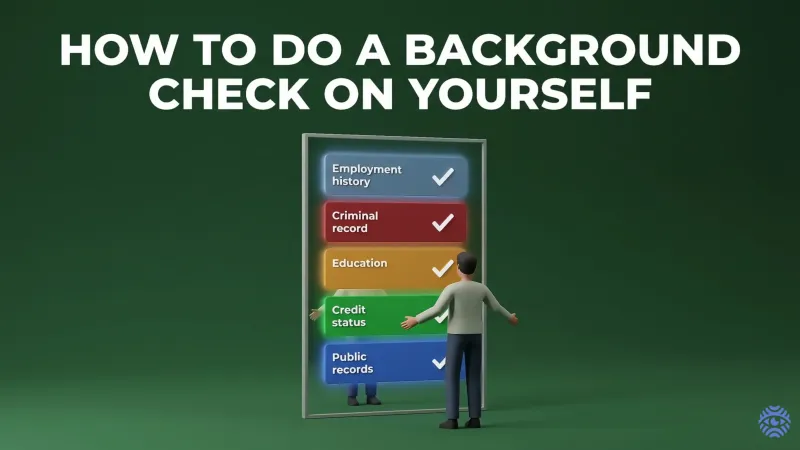
When people hear “background check,” they usually think of employers checking out job applicants. But background checks are not just for companies, you can also run one on yourself. Doing a self-background check lets you see yourself as others see you, pick up errors, and prepare for crucial moments in life. Whether you are job-hunting, apartment-hunting, or just wish to satisfy your curiosity, it’s a good idea to know what information is in your file before others come snooping.
Benefits of Running a Self Background Check
A personal background check may sound unnecessary at first, but it has clear benefits.
- Catch mistakes before they cause problems – Records are not always correct. Your name could be confused with another person’s. If you scan early, you can fix errors before they cost you a job.
- Save time during applications – When you already know what’s inside my background check, you can quickly answer questions about jobs, schools, or addresses.
- Build confidence – You feel calmer in interviews or meetings when you know your history matches the facts.
- Protect yourself from identity theft – If you find strange addresses, phone numbers, or accounts linked to your name, it may be a sign someone used your information.
- Improve job chances – Employers prefer candidates without surprises in their file. A self-check helps you stay ready.
It is like proofreading your own story. By checking, you make sure your life record is accurate and fair.
What Does a Background Check Include?
Background checks can vary, but most share the same main sections.
- Identity scan – Name, date of birth, and Social Security number.
- Employment history – Jobs you worked, titles, and dates.
- Education study – Schools, diplomas, or degrees you listed.
- Criminal records – Arrests, charges, and convictions, depending on local law.
- Driving record – Tickets, suspensions, or accidents.
- Credit report – Some employers review credit history for roles in finance or security.
- Licenses – If you claimed professional licenses, they may be verified.
- Social media background check – Many companies explore online activity. Learn more here: social media background check.
Not every situation requires all of these. For many people, a basic background check is enough.
How to Get a Background Check on Yourself
Doing a background check on myself may sound tricky, but the process is simple if you go step by step.
- Credit report – In the U.S., you can get one free report each year from Equifax, Experian, and TransUnion. It takes just minutes online.
- Criminal record – Most states let you order your own record online. Some require fingerprints. The cost is usually small.
- Driving record – Visit your state’s DMV website. You can usually download your history quickly.
- Education and work history – Contact schools and past employers to confirm details. Keep copies of transcripts or letters.
- Explore online results – Search your own name. Look at what shows up in the first two pages. Delete or hide things that could look unprofessional.
- Public records – Court files and property records are often public. Many counties post them online.
- Use online services – If you want everything in one place, some services collect your public data into one report.
Tip: Create a folder with all your results. Label it “my background check.” This way you always have the information ready.
Get a Self Background Check with X-Ray.Contact
If you don’t want to search through many sites, you can use a service like X-Ray.Contact. It offers a faster way to run a personal background check.
With X-Ray.Contact you can:
- Gather records into one full report.
- See phone numbers, emails, and addresses tied to your name.
- Catch errors before employers or landlords notice them.
- Study if your identity is being misused.
It makes the process easier and saves you time, especially if you need results before applying for a new role or signing a lease.
Final Thoughts
A self-background check can be completed without complication, and it could spare you from trouble later on. No matter whether you call it an individual background check, a background check on myself, or just plain іnspection of what I have done, the purpose is always the same: make sure what you say holds water.
What takes a few hours now frees you from future surprises, builds confidence, and allows employers, landlords, or anyone else to see where you are prepared. The time to do it like this is before it’s necessary.